
Where Things Stand in 2026
The adoption curve has sharpened considerably over the past two years. Major licensed sportsbooks in regulated US states – not just the offshore gray market operators that embraced crypto early – now offer Bitcoin and Ethereum deposits as standard options. A smaller but growing set of books have added stablecoins, primarily USDC and USDT, as deposit and withdrawal currencies. The offshore and crypto-native sportsbook segment has expanded dramatically, with dozens of operators now building their entire payment and account infrastructure around blockchain rails rather than treating crypto as an add-on.
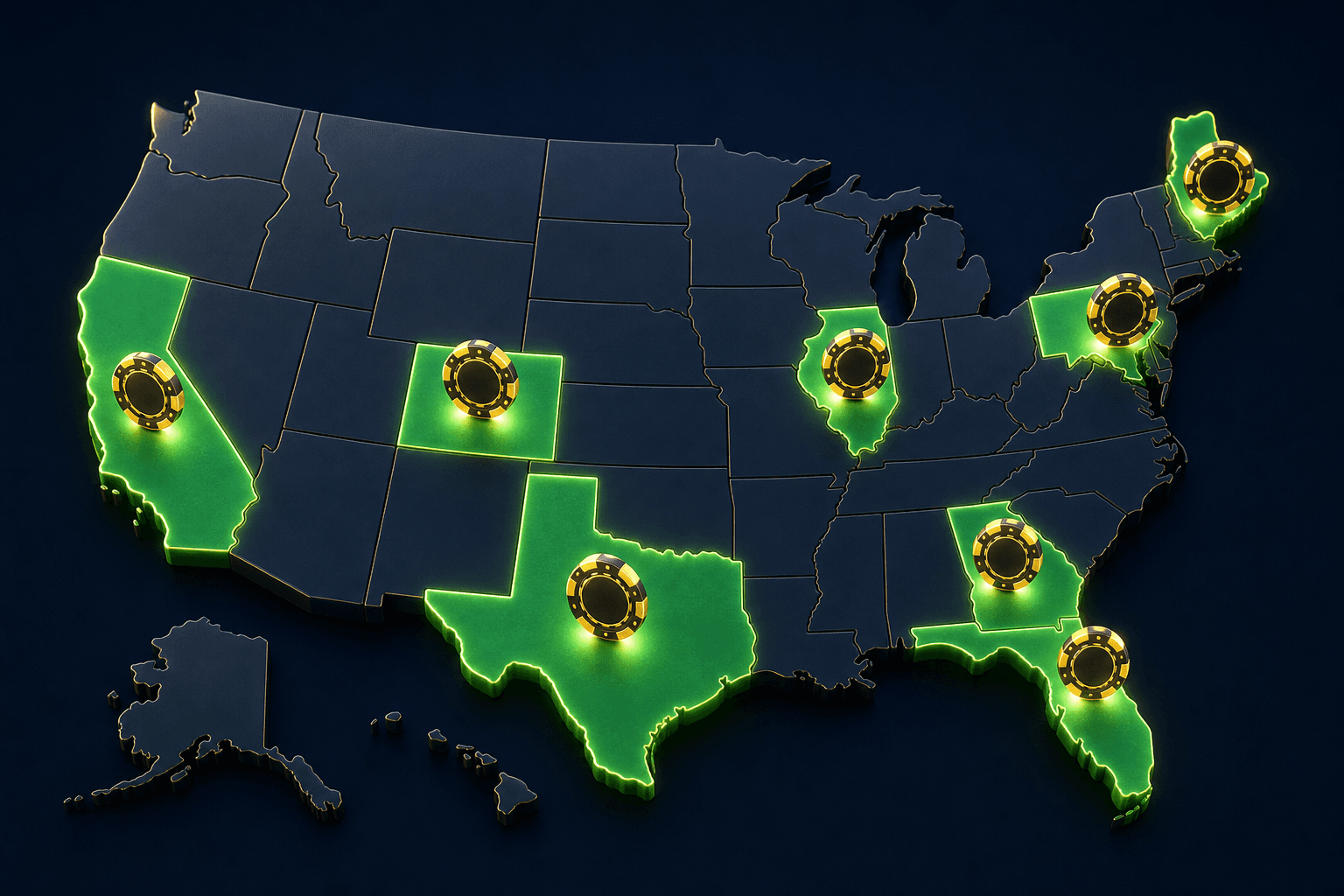
The regulatory picture has also shifted. Several US states have updated their sports wagering frameworks to explicitly address cryptocurrency deposits, and the SEC's more settled stance on major cryptocurrencies following the 2024 regulatory clarifications removed some of the legal ambiguity that previously made licensed operators cautious. Europe has moved further – Malta, Gibraltar, and several other established licensing jurisdictions now have explicit crypto sportsbook licensing frameworks. None of this means the regulatory environment is simple or uniform, but it's meaningfully less murky than it was in 2022 or 2023.
For bettors, the practical implications fall into a few distinct categories: payment speed and fees, privacy, access, odds and limits, and a newer category that's genuinely novel – on-chain betting markets and provably fair mechanisms.
Faster Withdrawals Are the Clearest Practical Benefit
If you've been frustrated by the 3–5 business day wait for sportsbook withdrawals via bank transfer or the 24–48 hour processing time for e-wallets, crypto withdrawals are a genuine upgrade. Most major sportsbooks processing crypto withdrawals complete them in minutes to a few hours once approved. Bitcoin transactions confirm within 10–60 minutes depending on network conditions and fee priority. Stablecoin withdrawals on faster networks like Polygon or Solana process in seconds.
The fee structure is more complicated. While blockchain transaction fees are generally lower than wire transfer or payment processor fees, they're not zero, and they vary significantly by network and congestion. A Bitcoin withdrawal during high network activity carries a higher fee than an USDC transfer on a layer-2 network. The practical takeaway: stablecoin withdrawals on efficient networks offer the best combination of speed and low cost for most bettors. Native BTC withdrawals are fast but slightly less fee-predictable.
Deposit processing is similarly improved. Crypto deposits at most sportsbooks credit to your account as soon as blockchain confirmation occurs – often within one to three confirmations depending on the book's policy. Compare that to ACH deposits that can take 24–72 hours to clear, and the operational advantage is real for bettors who want to act quickly on a market opportunity.
Privacy, Account Access, and the Offshore Question
One of the original appeals of crypto for sports betting was the ability to fund accounts without direct bank involvement, which carries some privacy benefits and sidesteps the inconsistent treatment of gambling transactions by US banks and payment processors. That use case hasn't disappeared, though it's evolved.
For bettors in states with legal, regulated sports wagering, privacy is less of a driver than it once was – you're using licensed books, your identity is verified through KYC processes regardless of payment method, and the crypto deposit route doesn't change your tax reporting obligations (US gambling winnings are taxable whether you deposit in dollars or Bitcoin). The practical benefit in regulated markets is largely operational: speed and convenience rather than anonymity.
For bettors in states where sports betting is still not regulated or where access to certain books is restricted, offshore crypto sportsbooks remain the main access point. This is where the risk calculus gets more complicated. Unlicensed offshore operators carry real risks – no regulatory recourse if a dispute arises, no guarantee of fund security, and exposure to operators that may restrict accounts or delay withdrawals selectively. Some offshore crypto books have strong reputations built over years of operation. Others do not. Due diligence matters significantly more in this segment than with regulated domestic books.
The privacy dimension is also worth calibrating against the actual state of blockchain transparency. Bitcoin and most major cryptocurrencies operate on public ledgers – transactions are pseudonymous, not anonymous. On-chain analytics firms can and do trace fund flows with high accuracy when they have a starting point. If privacy is your primary motivation, the realistic privacy protection from crypto betting is more limited than the marketing suggests.
How Crypto Is Changing Odds Availability and Account Limits
This is a development that matters specifically for sharper bettors and is less discussed in general coverage of the topic. Several crypto-native sportsbooks have built their business model around higher limits, faster line movement, and a lower tolerance for the account restriction practices that plague winning bettors at traditional books.
The structural reason is straightforward: crypto-native books often operate with lower overhead, no payment processing middlemen, and frequently on a peer-to-peer or exchange model where they're not directly taking the other side of every bet. When a book isn't exposed to winner-loser dynamics in the same way a traditional sportsbook is, the incentive to limit winning accounts diminishes. Exchanges like Smarkets or Betfair have operated on this model for years with fiat currency. The crypto ecosystem has produced a new wave of similar operators specifically targeting bettors who've been limited elsewhere.
For the average recreational bettor, this distinction matters less. For someone betting meaningful volume and facing the reality of account restrictions at traditional books, crypto-native exchanges and high-limit books represent a genuinely different operating environment.
Odds availability has also expanded through decentralized prediction markets – platforms where users create and bet on markets without a central operator. Polymarket is the most prominent example in the prediction space, though its primary focus is on political and current events rather than sports specifically. Decentralized sports betting protocols built on Ethereum and Solana are further behind in liquidity and usability, but they represent a structural alternative to centralized books that is further along than it was two years ago.
On-Chain Betting and Provably Fair Mechanisms
The genuinely novel development in 2026 relative to the earlier phase of crypto sports betting is the maturation of on-chain betting protocols and provably fair verification. These aren't widely adopted at the mainstream level yet, but they're far enough along to be worth understanding.
Provably fair betting uses cryptographic verification to allow a bettor to independently confirm that an outcome wasn't manipulated after the bet was placed. Traditional sportsbooks operate on trust – you trust that the book is paying correct odds, processing bets honestly, and not retroactively adjusting outcomes. Provably fair mechanisms replace that trust requirement with mathematical verification. Whether that matters to you depends on how much you trust the books you currently use, but it's a fundamentally different model.
Smart contract-based betting protocols take this further. A smart contract is self-executing code on a blockchain that automatically distributes funds based on verified outcome data. When you bet on a smart contract platform, the payout logic is written in publicly readable code and executes automatically when an oracle (a trusted data feed) reports the result. There's no withdrawal request to approve or deny, no customer service interaction required, and no counterparty discretion in the payout process.
The limitations are real. Smart contract platforms depend on the accuracy of their oracle data sources, which introduces a different kind of trust requirement. Liquidity on decentralized betting protocols is still thin compared to major centralized books, meaning odds are less competitive on obscure markets and maximum bet sizes are constrained. Smart contract bugs have caused real financial losses on blockchain platforms in other sectors. These are not arguments against the model's long-term potential, but they're honest constraints on its current usefulness for high-volume bettors.
Stablecoins and Why They Matter More Than Bitcoin for Practical Betting
For most of the bettors who have adopted crypto at sportsbooks, stablecoins – primarily USDC and USDT – have become the preferred medium rather than native cryptocurrencies like Bitcoin or Ethereum. The reason is simple: if you're betting in dollar terms, holding your bankroll in a currency that fluctuates 5–10% in a day adds an unwanted variable. A winning week at the book can be partially offset by a BTC price drop between deposit and withdrawal.
USDC (Circle's USD Coin) and USDT (Tether) both maintain a 1:1 peg to the US dollar and allow for the speed and low-fee benefits of crypto infrastructure without the price volatility. USDC in particular has become the preferred stablecoin at regulated sportsbooks due to Circle's regulated status and transparent reserve auditing, which addresses the counterparty risk concerns that have followed Tether.
The mechanics for a bettor are straightforward: convert dollars to USDC via Coinbase, Kraken, or another exchange, withdraw USDC to a wallet, deposit USDC at the sportsbook. Withdrawals reverse the process. The friction is mainly in the initial wallet setup and exchange account, which has a learning curve for bettors new to crypto infrastructure. Once that setup is complete, the operational experience is genuinely smoother than most traditional payment methods.
The Risks That Don't Go Away With Crypto
Faster withdrawals and lower fees don't change the fundamental risk calculus of sports betting. The expected value of most bets placed at sportsbooks is negative – that's how books sustain their margins. No payment method changes that math. Crypto deposits don't make a bad bet good or a -110 line into something more favorable.
The volatility risk of holding non-stablecoin crypto in a betting account or wallet is a genuine additional risk layer. If you deposit Bitcoin during a bull run and withdraw during a correction, you've taken on price exposure that has nothing to do with your betting activity. Stablecoins eliminate this, but they introduce counterparty risk on the stablecoin issuer that native crypto doesn't carry.
Offshore crypto sportsbooks carry the full set of risks that offshore betting always has, plus a few specific to crypto: smart contract bugs, rug pulls from operators building on unaudited code, and the general lack of recourse in disputes. Regulated, licensed operators using crypto as a payment rail within an otherwise conventional sportsbook structure are meaningfully lower risk than pure crypto-native offshore operators without licensing.
Gambling responsibly applies in full regardless of payment method. The accessibility that crypto brings – faster deposits, fewer friction points from banks – can make it easier to chase losses or deposit more impulsively. If you're using crypto to bypass the natural friction that slows down problematic gambling behavior, that's worth being honest with yourself about.
FAQ
Do I owe taxes on winnings if I bet with crypto? In the US, yes. Gambling winnings are taxable income regardless of payment method. Additionally, using cryptocurrency to fund transactions may trigger taxable events depending on whether the crypto has appreciated since you acquired it. Consult a tax professional familiar with both gambling and cryptocurrency tax treatment if you're betting significant volume.
Which licensed US sportsbooks currently accept crypto? The list changes frequently, but as of 2026 several major regulated operators – including BetMGM, DraftKings, and Caesars – accept Bitcoin in select states. Check the payment methods section of any book's site for the current list. Availability varies by state due to licensing conditions.
Are crypto sportsbook bonuses better than regular bonuses? Some crypto-native offshore books offer enhanced bonuses for crypto deposits. The same evaluation framework applies as any bonus: read the rollover requirements carefully. A 10x rollover requirement on a deposit bonus means you need to wager ten times the bonus amount before withdrawing, which frequently makes the bonus lower value than it appears.
What's the safest way to store crypto between betting sessions? A reputable software wallet like Coinbase Wallet or MetaMask for frequent use, with larger reserves in a hardware wallet (Ledger or Trezor) for security. Never leave large amounts on an exchange or sportsbook platform longer than necessary.
Can I bet with crypto anonymously? At regulated licensed sportsbooks, no – KYC identity verification is required regardless of payment method. At some offshore platforms, minimal KYC is required up to certain deposit thresholds, but full anonymity on a blockchain is more limited than commonly believed given the public nature of on-chain transaction data.
📚 Sources
Chainalysis – Crypto Adoption and Gambling Report 2025 – https://www.chainalysis.com/blog/crypto-gambling-2025/
American Gaming Association – State Gaming Revenue Data and Regulatory Updates – https://www.americangaming.org/research/state-gaming-map/
Polymarket – Decentralized Prediction Market Platform – https://polymarket.com
Circle – USDC Transparency and Reserve Reports – https://www.circle.com/en/usdc#transparency
Pinnacle – Understanding Crypto Sportsbook Models – https://www.pinnacle.com/en/betting-articles/betting-strategy/crypto-sportsbooks/XGMDYH4RNBCZ7KGP
IRS – Tax Topic 419: Gambling Income and Losses – https://www.irs.gov/taxtopics/tc419
Malta Gaming Authority – Crypto and Blockchain Licensing Framework – https://www.mga.org.mt/player-hub/crypto-gambling/