
If you play DFS or season-long fantasy and you're also a sports bettor – or curious about becoming one – understanding this relationship clearly helps you engage with both more intentionally.
Fantasy Sports and Sports Betting: How Similar Are They Really?
It's worth establishing the factual overlap before assessing the gateway question. Traditional season-long fantasy sports – drafting a team, managing a roster over weeks, competing against a fixed group – sit at the low-engagement end of the spectrum. Outcomes are diversified across many players and many weeks, the financial stakes are typically small among friends, and the experience is spread out over a season rather than concentrated into individual game moments.
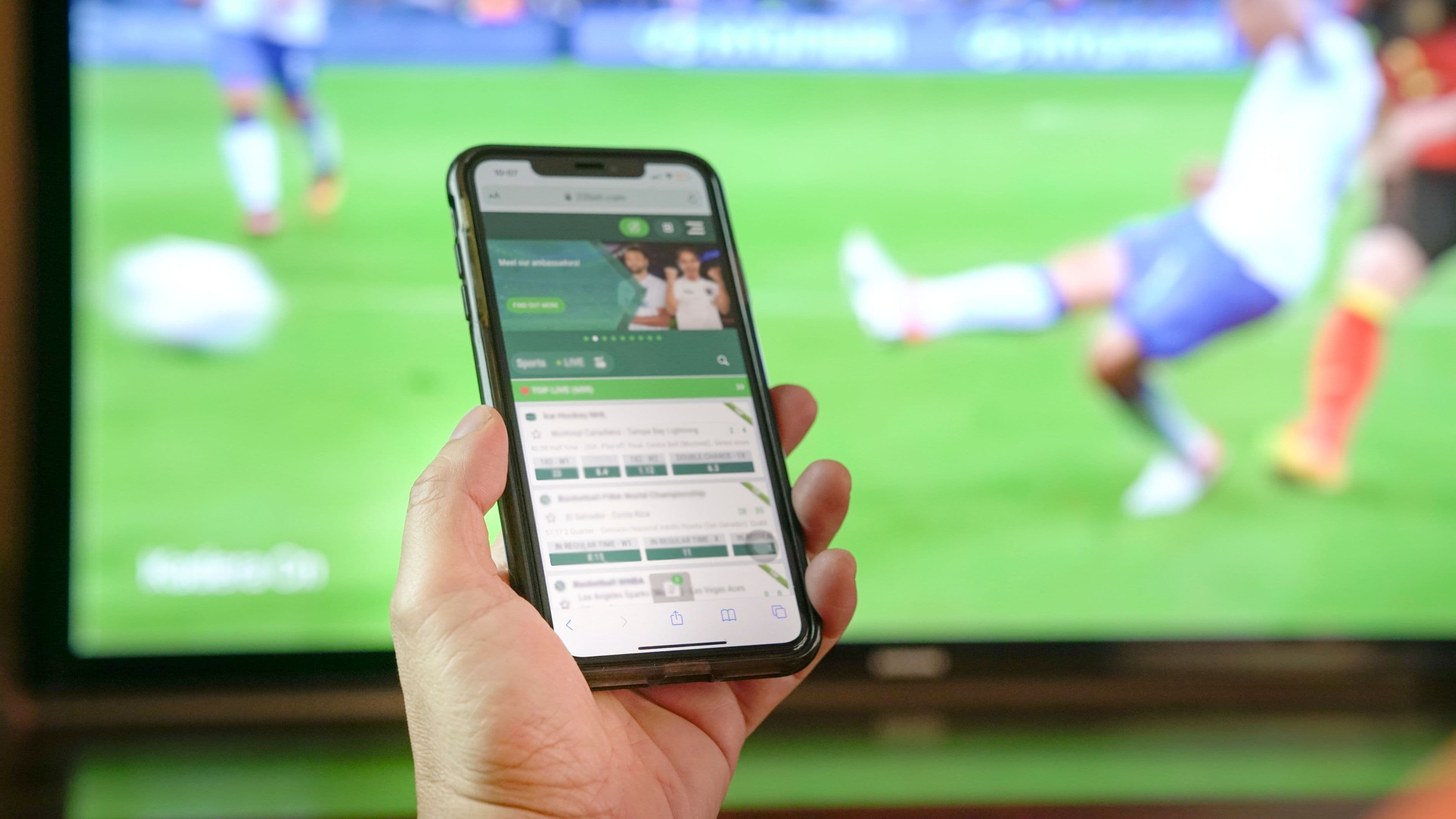
Daily fantasy sports (DFS) is a different product with a different profile. DFS platforms like DraftKings and FanDuel – which both subsequently launched regulated sportsbooks – are structured around single-slate contests where you pick a lineup for one day's games against a large field of contestants. The entry fees are real money, the results are known within hours, and the dopamine cycle of waiting for a score to come in is structurally very similar to waiting for a game result to resolve a bet. DFS platforms even use the same design language as sportsbooks: deposit bonuses, same-game parlays in DFS clothing, live scoring dashboards, and push notifications when a player scores.
This structural similarity is not accidental. The companies that built DFS platforms knew what they were doing when they designed the experience, and many of them were explicitly building a customer base they planned to convert to regulated sports betting when legalization expanded across US states. That conversion happened, and it was effective.
What the Research Actually Shows
The gateway hypothesis – that engaging with one form of gambling leads to escalating engagement with others – has been studied in the context of fantasy sports and real-money betting, with some consistent findings worth understanding.
A study published in the journal Addictive Behaviors found that DFS participation was significantly associated with sports betting involvement, even after controlling for general gambling propensity. Importantly, the relationship wasn't simply explained by the fact that "gamblers gamble" – DFS participation specifically predicted sports betting involvement at rates higher than other gambling forms. The researchers noted that the skill-framing of DFS (it's classified as a game of skill under US law, which was critical to its pre-PASPA legality) may lower the psychological barrier to viewing sports betting as similarly skill-based and therefore engaging in it more readily.
Research by the International Centre for Gambling Studies at the University of Nevada Las Vegas found that problem gambling rates among DFS players were substantially higher than among the general population, and that the intensity of DFS participation – number of contests entered, dollar amount wagered – was a stronger predictor of problem gambling indicators than simple participation. This is consistent with the idea that DFS and sports betting attract people with similar risk profiles, rather than DFS specifically creating new problem gamblers from scratch.
The distinction matters. If DFS is a gateway in the sense that it recruits new populations who would not otherwise have engaged with gambling, that's a specific harm. If DFS primarily attracts people who were already predisposed toward gambling engagement and simply provides another channel, the policy and personal risk implications are different. The current research suggests both dynamics are present – some gateway effect and significant overlap with existing gambling populations.
Why the Skill vs. Luck Question Is Central
One of the most practically relevant aspects of the DFS-to-betting pathway is how both activities are framed in terms of skill. DFS is legally classified as a game of skill in most US states, and the platforms market heavily on this framing: study the matchups, optimize your lineup, build a statistical edge. This framing resonates with a certain type of sports fan – the analytical, data-driven person who isn't drawn to pure chance games like slots or roulette but is very drawn to the idea that intelligence and research can produce consistent results.
The transition to sports betting often happens because this person brings the same mental model with them. And that mental model is partially correct – there is genuine skill involved in sports betting, and disciplined handicappers with rigorous bankroll management can generate positive expected value over time. The problem is that the skill involved is significantly more demanding than most people initially appreciate, the house edge is real and persistent, and the psychological factors that make gambling engaging (variance, near-misses, emotional investment in outcomes) work against analytical discipline in ways that are easy to underestimate.
The person who transitions from DFS to sports betting because they feel like a skilled analyst is sometimes correct about their edge – and sometimes carrying overconfidence built on a medium where the edges are smaller and the games are different. Being aware of this going in doesn't eliminate the risk, but it helps you calibrate more honestly.
The Industry's Role in the Relationship
It would be incomplete to discuss this topic without acknowledging how the industry has actively shaped the relationship between fantasy sports and betting. DraftKings and FanDuel's evolution into full-scale sportsbooks is the most obvious example, but the strategic logic was visible early. Both platforms built massive databases of highly engaged, sports-literate users who had demonstrated willingness to put real money on sports outcomes. When US states began legalizing sports betting post-PASPA (2018), those user bases became the core acquisition target for their sportsbook products.
The cross-promotion is still active. DFS platforms push sportsbook products to their users, and sportsbooks push DFS contests to their betting customers, keeping both activity types in the same app ecosystem. Bonus structures are designed to move users across products. The friction between "I play DFS" and "I also place sports bets" has been deliberately reduced to essentially zero.
This isn't inherently malicious – the companies are legal businesses operating in regulated markets, and plenty of people engage with both products without any harm. But it's worth being clear-eyed about the commercial logic: the industry benefits from users treating DFS and betting as interchangeable, and the product design reflects that goal.
What This Means If You Play Both
If you currently play DFS and are considering sports betting, or already do both, the practical question is how to engage with each on your own terms rather than the platform's terms.
The most important thing to recognize is that the variance structures are different. In DFS contests – especially large-field tournaments – the variance is extremely high. Most of the prize pool goes to a small number of top finishers, which means the experience of DFS is punctuated by both large wins and long dry runs. That variance profile conditions players toward accepting significant short-term losses as part of the game, which can be dangerous when applied to sports betting where flat-betting with proper bankroll management is the standard discipline.
Sports betting rewards consistency and patience in a way that large-field DFS tournaments don't. The skill expression in sports betting comes through sustained advantage over many bets at controlled stakes, not through occasional large cashes. Bringing a DFS tournament mentality to sports betting – chasing the big score, accepting high variance as normal, being comfortable with large drawdowns – is a significant mismatch that can deplete a bankroll before the underlying edge (if any) has a chance to show up.
Treating the two activities with separate bankrolls, separate mental models, and separate tracking is one practical way to avoid letting the framing of one bleed into the other.
Responsible Engagement: Signals Worth Paying Attention To
Whether or not you find the gateway framing convincing, there are specific behavioral patterns that indicate a person is moving from recreational engagement into something more problematic – and they apply equally to DFS and sports betting.
Chasing losses is the most reliable signal. Making additional bets or entries specifically to recover what you lost in the last session is a behavior pattern that reliably predicts escalating problems. In both DFS and sports betting, losing sessions are normal and expected – the response to them is what matters.
Increasing stakes to maintain the same level of excitement is another indicator. If $20 entries feel as neutral as $5 entries used to, and you find yourself needing to increase to $50 to get the same engagement, that's tolerance building in a way that parallels how substance use escalates.
Letting betting activity intrude on commitments – work, relationships, finances – is the clearest sign that the activity has shifted from entertainment to problem behavior. Both DFS and sports betting can be engaged with sustainably at stakes that represent genuine entertainment spending without these patterns emerging. If you notice them in yourself, the National Problem Gambling Helpline (1-800-522-4700) and the National Council on Problem Gambling's website offer confidential support and resources.
The Takeaway
Fantasy sports – particularly DFS – and real-money sports betting are closely related activities with meaningful structural and psychological overlap. The research supports the existence of a gateway effect, particularly from DFS to sports betting, though it's more accurately described as both activities attracting the same high-engagement demographic while DFS specifically lowers the psychological and practical barriers to sports betting entry.
For most people, engaging with both is benign recreation. For people with existing gambling risk factors – a history of chasing losses, gambling beyond comfortable financial limits, using gambling as an emotional escape – the combination is worth approaching with more awareness than either industry tends to encourage. The skill framing of both activities is real but partial, and the overestimation of personal edge is a very common failure mode in both.
Bet and play with clear limits, track what you're actually spending, and pay attention to the behavioral signals that separate recreational engagement from something you'd rather rein in.
FAQ
Is DFS legally considered gambling in the United States? It depends on the state. DFS is classified as a game of skill and legal in most US states under federal law (the Unlawful Internet Gambling Enforcement Act excludes fantasy sports that meet certain criteria). However, some states have banned or restricted DFS on the grounds that it constitutes gambling regardless of skill classification. Sports betting legality is separately determined at the state level following the 2018 Supreme Court ruling in Murphy v. NCAA.
Do DFS skills actually transfer to sports betting? Some do, some don't. Understanding player props, team matchups, game context, and statistical trends are relevant in both activities. The key difference is that in DFS you're competing against other players' lineup decisions, while in sports betting you're competing against the bookmaker's line. The margin structure, the role of public betting patterns, and the risk management discipline required are quite different.
Can you be profitable at both DFS and sports betting? Yes, but the percentage of long-term profitable participants in both is significantly smaller than the percentage who think they are. Sustained profitability in either activity requires genuine skill, disciplined bankroll management, and an honest accounting of results over meaningful sample sizes. Most casual participants lose money over time, which is how these are businesses.
What's the difference between DFS tournaments and cash games in terms of risk? DFS cash games (head-to-head and 50/50 contests where roughly half the field wins) have much lower variance than large-field tournaments. Cash games reward consistent, above-median lineups and are closer to the variance profile of straight sports bets. Tournaments are extremely high-variance, winner-takes-most structures. From a risk management standpoint, a heavy tournament portfolio is significantly more volatile than a cash-game-focused approach.
Where can I get help if gambling – fantasy or real-money – is becoming a problem? The National Council on Problem Gambling operates a 24/7 helpline at 1-800-522-4700 and an online chat at ncpgambling.org. Gamblers Anonymous also offers peer support groups in most US cities and online. Both resources are free and confidential.
📚 Sources
Hague B et al. – Daily Fantasy Sports: The Role of Self-Reported Skill and Gambling Problems – Addictive Behaviors, 2017 – sciencedirect.com/science/article/pii/S0306460317301120
National Council on Problem Gambling – Sports Betting and Fantasy Sports – ncpgambling.org/programs-resources/resources/sports-betting
American Gaming Association – Sports Betting in America – americangaming.org/research/state-gaming-map
Legal Information Institute – Murphy v. NCAA (2018) Summary – law.cornell.edu/wex/paspa
Journal of Gambling Studies – Fantasy Sports and Problem Gambling Overlap – link.springer.com/journal/10899