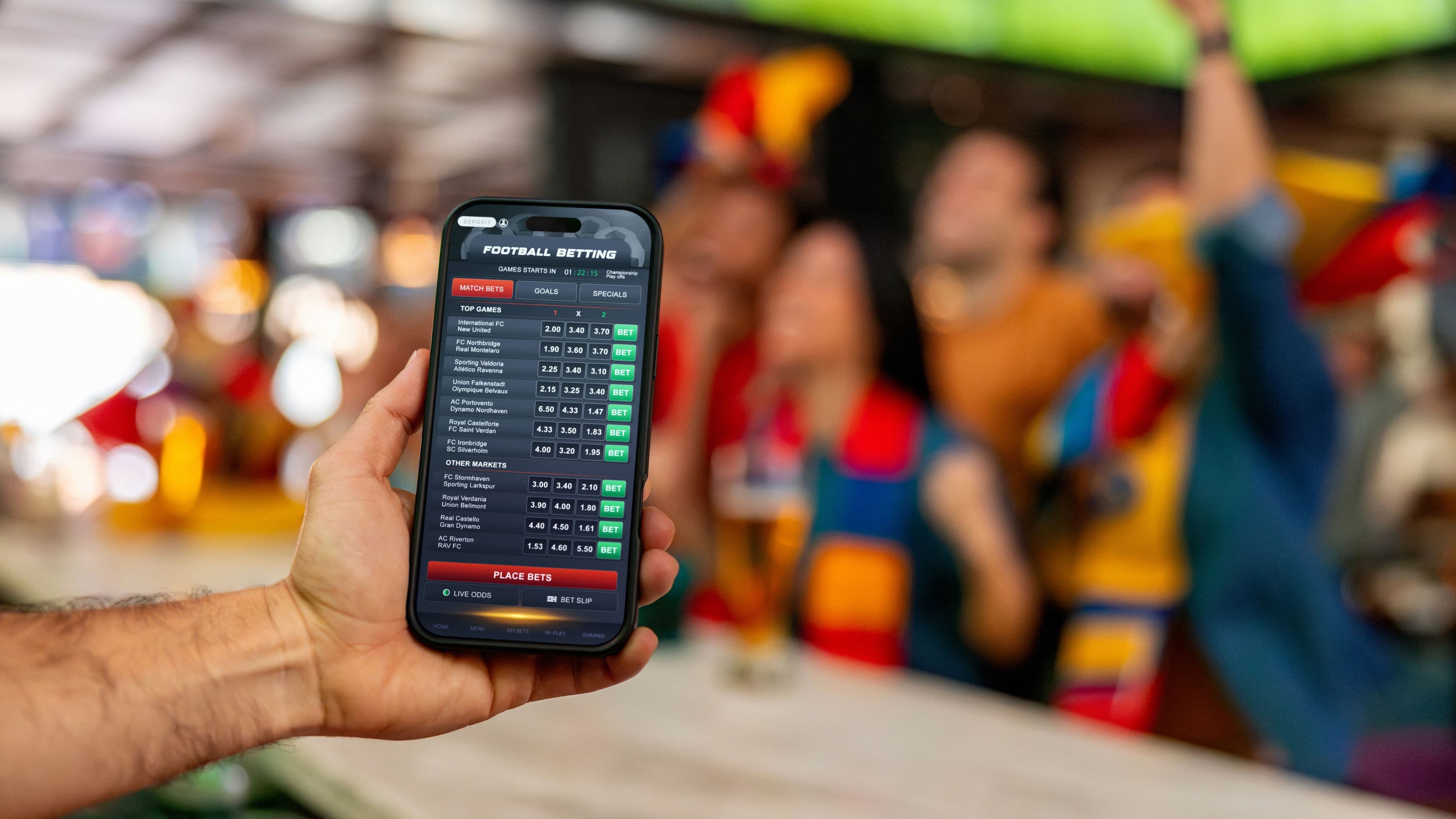

Understanding exactly what micro-wagering is — and what the sportsbooks know about it that most bettors don't — is the starting point for deciding whether it belongs in your strategy at all.
What In-Game Micro-Wagering Actually Is
Traditional sports betting mostly happens before a game starts: you pick a side, a total, or a prop, and you wait for the result. In-game (or live) betting expanded that to allow wagering while the game is in progress, with odds updating as the action unfolds. Micro-wagering takes live betting several steps further.
Instead of betting on game-level outcomes — who wins, what the final score is — micro-wagering breaks the game into extremely small units and lets you bet on individual moments within them. Think: will the next play be a run or a pass? Will this free throw go in? Will the next at-bat result in a strikeout? Does the next point in tennis go to the server or the returner? These are bets that resolve in seconds or minutes, not hours, and sportsbooks now offer dozens or hundreds of them per game in real time.
The granularity is the defining characteristic. A single NFL game might generate 200+ micro-markets. An NBA game can produce prop markets on every possession if the platform supports it. The pace is fast enough that some bets open and close before many bettors can even evaluate them properly.
How Sportsbooks Structure Micro-Wagering Markets
To understand whether micro-wagering is beatable, you need to understand how sportsbooks price these markets — and their structural advantages in doing so.
Standard pre-game markets are priced with typical margins (called the "juice" or "vig") of 4–7% on major sports, meaning the sportsbook builds roughly that percentage of profit into every bet at even volume. That's the house edge before any other factors. For major lines on NFL, NBA, and MLB, sharp bettors can find value by identifying where the market has mispriced a line — and the market is relatively efficient because millions of dollars and professional betting operations continuously pressure the odds toward accuracy.
Micro-wagering markets are less efficient and carry significantly higher margins. The vig on micro-markets typically runs 8–15%, sometimes higher, because the sportsbook is pricing fast-moving, high-uncertainty events in real time with limited competitive pressure from sharp money. There's no time for a betting market to efficiently correct itself on a three-second tennis point. The sportsbook sets the line, you take it or leave it, and the result comes in before you can compare prices elsewhere.
The house edge on micro-wagering is not a rumor — it's built into the math of the markets, and it's structurally larger than most other bet types.
Why Micro-Wagering Feels Like an Edge (But Often Isn't)
Here's the psychological mechanism that makes micro-wagering feel strategic when it frequently isn't: you're watching the game in real time, you can see what's happening, and you're forming rapid judgments about what's likely to occur next. That feeling of informed decision-making — "I just watched this pitcher throw three straight balls, he's clearly off today, I'll bet the walk" — creates the impression of an edge.
The problem is that the sportsbook's algorithm is also watching the game in real time, adjusting odds continuously, and has priced in what you're observing before you act on it. Your judgment that the pitcher is struggling is a judgment being made by thousands of other bettors simultaneously, and the odds have already compressed to reflect the increased probability of the walk. You're not acting on private information — you're acting on public information that's already baked into a line with a significant vig attached.
This is the core issue with reactive micro-wagering: the information advantage you think you have is usually not there, and the cost of being wrong is compounded by the higher margin built into these markets.
When Micro-Wagering Can Carry Genuine Value
That said, dismissing micro-wagering entirely as unbeatable ignores the cases where a systematic edge is realistically achievable. These are more specific — and more work — than casual micro-bettors typically pursue.
Speed-based arbitrage. Some bettors exploit the brief lag between an event occurring and the sportsbook updating its odds. If a key player goes down on a visible play and you can get a bet in on the affected team at pre-injury odds before the book adjusts, that's a genuine information edge. This requires fast execution, platform familiarity, and ideally multiple sportsbooks open simultaneously. It's also heavily scrutinized by sportsbooks — accounts that consistently exploit this lag tend to get limited or flagged.
Statistical modeling of high-frequency events. Micro-markets on predictable high-frequency events — serve holds in tennis, zone entries in hockey, ball-in-play outcomes in baseball — can be modeled using historical distributions and real-time game state data. A bettor with a genuine statistical model running against live data can find situations where the book's fast-moving line has lagged behind the updated probability. This is the equivalent of professional live trading and is genuinely available to systematic, analytical bettors — it just requires real infrastructure, not intuition.
Market-specific inefficiencies on lower-profile micro-markets. Sportsbooks price their most popular micro-markets most accurately because the betting volume forces efficiency. Obscure micro-markets — second-half props in lower-tier leagues, specific play-type markets in sports the book covers less intensely — may carry softer lines where a knowledgeable bettor has a real edge over the book's automated pricing.
None of these are available to the casual bettor who simply watches the game and fires bets on gut feeling. The edge cases require infrastructure, speed, or deep statistical knowledge that most recreational bettors don't bring to the table.
The Bankroll Management Problem With Micro-Wagering
Even if you identify occasional value in micro-markets, the volume and pace of micro-wagering creates a bankroll management challenge that most bettors underestimate.
A normal pre-game bettor might place 5–20 bets on a Sunday of NFL games. A micro-wagering session on a single game can involve 30, 50, or 100 individual wager decisions in a few hours. At that volume, even a modest vig disadvantage compounds rapidly into significant expected losses over a session. The standard recommendation in sports betting — bet 1–3% of your bankroll per unit — becomes extremely difficult to maintain when you're making continuous small decisions at pace. The temptation to chase a bad sequence with another quick bet is constant, and the psychological difficulty of treating each micro-bet as a discrete strategic decision (rather than letting emotions from the previous result bleed into the next) is significant.
This isn't a knock on the bettor's discipline in the abstract — it's a structural feature of how micro-wagering is designed. The fast feedback loop is intentional, and it's the same mechanism that makes high-frequency wagering more difficult to manage than low-frequency wagering regardless of the bettor's skill level.
How Sportsbooks Promote Micro-Wagering — and What That Tells You
It's worth noticing how heavily sportsbooks market micro-wagering features. Enhanced live betting interfaces, micro-market promotions, in-game bet boosts, and push notifications during games are all significant investment areas for major platforms. FanDuel, DraftKings, BetMGM, and Caesars all compete aggressively on the richness of their live and micro-betting features.
Sportsbooks invest most heavily in product features that generate the most revenue. The resources going into micro-wagering infrastructure are not charitable investments in bettor experience — they're driven by the product being highly profitable per dollar wagered. That's useful information. When a sportsbook is enthusiastically promoting a betting format, it's a reasonable signal that the format is more advantageous to the house than alternatives, not less.
Micro-Wagering vs. Traditional Live Betting: Key Differences
Standard in-game live betting — wagering on game outcomes, spreads, and totals as the game progresses — is already more challenging than pre-game betting for most bettors due to compressed decision windows and constantly shifting odds. Micro-wagering amplifies every challenge of live betting:
The decision window is shorter (seconds vs minutes). The market efficiency advantage is greater (books have more time to price game-level markets accurately). The vig is higher. The volume available is much greater, meaning the total opportunity to make bad decisions per session is significantly larger. And the psychological tempo is faster, which degrades decision quality relative to slower, more deliberate pre-game analysis.
For bettors who find live betting difficult to profit from, micro-wagering is structurally harder, not easier — even though it feels more engaging and controllable.
Practical Framework: Should You Micro-Wager?
Rather than a blanket yes or no, the honest answer is conditional on what you're actually trying to accomplish.
If you're betting recreationally for entertainment: Micro-wagering can enhance game enjoyment — it keeps you engaged play-by-play. Just treat it as entertainment expenditure with a set session budget, not a strategy. Decide a flat dollar amount you're willing to spend on micro-bets for the game, the same way you'd budget for food and drinks, and treat the outcome as the cost of entertainment. Don't expect to come out ahead.
If you're betting with a profit motive: Micro-wagering in its casual form (watching and reacting) is not a viable profit strategy. The structural vig and market efficiency disadvantage makes it a negative-expectation activity for the vast majority of practitioners. Your time is better spent developing an edge in pre-game markets, where the margins are lower, the decision windows are longer, and systematic analysis is more actionable.
If you have analytical infrastructure: Speed-based or model-based micro-wagering on specific markets is an area where a genuine edge can exist. But this is professional-grade work — it requires real data pipelines, execution speed, and account management across multiple books. If you're already operating at this level, you don't need this article to tell you whether micro-wagering is worth exploring.
FAQ
Does micro-wagering affect my betting limits or account standing? Exploiting speed-based inefficiencies in micro-markets — getting bets in before odds are updated — is one of the patterns sportsbooks use to identify sharp accounts. If you're consistently profitable on micro-markets, especially through timing-based bets, expect limits. Recreational bettors placing bets at normal speed on standard micro-markets are generally not at risk of being limited for micro-wagering activity alone.
Are micro-wagering odds worse than standard live betting odds? Generally yes. The vig on micro-markets tends to run higher than on game-level live betting markets, which already carry higher vig than pre-game markets. This is a structural feature of the market type, not a platform-specific issue.
Can I use micro-wagering to hedge a pre-game bet? Technically yes — you can use live micro-markets to hedge against adverse game developments. However, the cost of hedging through high-vig micro-markets is significant. If hedging is your goal, game-level live betting (point spread or total) is a more cost-efficient mechanism than individual play-by-play micro-markets.
What sports have the most developed micro-wagering markets? American football and basketball have the broadest micro-market coverage on US platforms. Tennis is particularly well-suited to micro-wagering due to its natural point-by-point structure. Soccer, baseball, and hockey are growing in micro-market depth. The markets are deepest on premium events (major leagues, top tournaments) and shallower on lower-tier competitions.
Is micro-wagering legal in all states where sports betting is legal? Micro-wagering is a feature of licensed sportsbook platforms and is legal wherever the sportsbook itself is licensed to operate. There are no separate regulations governing micro-wagering specifically in any current US regulatory framework.
The Bottom Line
Micro-wagering is a genuinely interesting development in sports betting — it makes watching a game a more active experience, and for a narrow category of systematic, analytically sophisticated bettors, it offers real opportunities. For everyone else, the structure of these markets works against the bettor more than standard pre-game wagering does.
The honest position: if you enjoy it and you're managing your budget like entertainment spending, micro-wagering is a legitimate way to engage with live sports. If you're trying to build a profitable betting strategy, your edge is almost certainly better deployed elsewhere.
Treat micro-wagering with the same clear-eyed analysis you'd apply to any bet — because the sportsbook certainly is.
📚 Sources
American Gaming Association – State of the states: US sports betting handle and market data: https://www.americangaming.org/research/state-of-the-states/
Journal of Gambling Studies – In-play betting and its relationship to gambling harm: https://link.springer.com/article/10.1007/s10899-019-09896-7
Covers.com – In-game betting explained: strategies and considerations: https://www.covers.com/betting/live-betting
Action Network – Live betting strategy guide: https://www.actionnetwork.com/education/live-betting
UK Gambling Commission – Remote gambling and software technical standards (live betting framework): https://www.gamblingcommission.gov.uk/licensees-and-businesses/guide/remote-gambling-and-software-technical-standards