
Understanding how in-play betting works, where it has genuine strategic value, and where it tends to trap bettors into poor decisions is worth the time if you're looking to bet more intelligently rather than just more frequently.
What Is In-Play Betting?
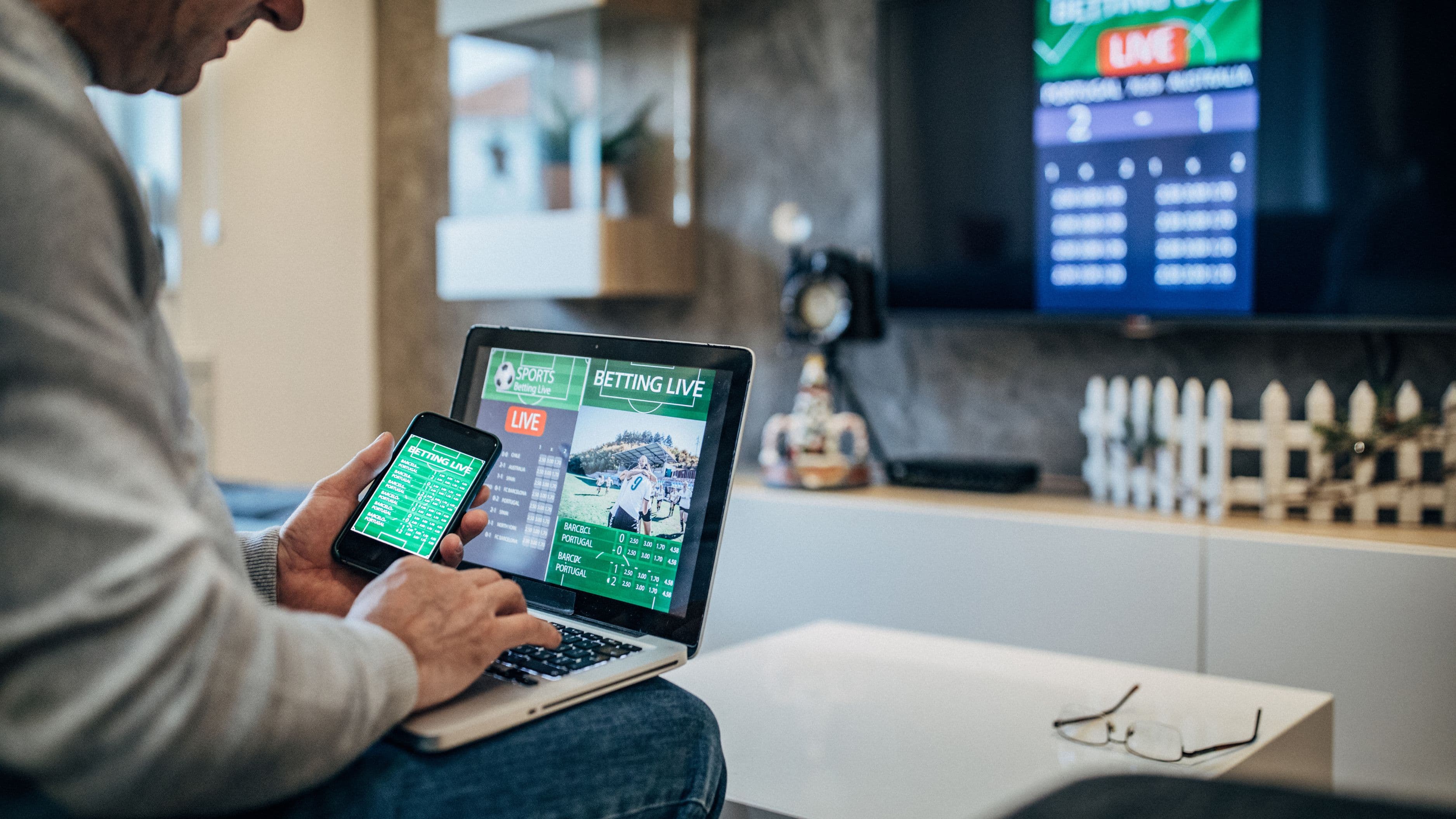
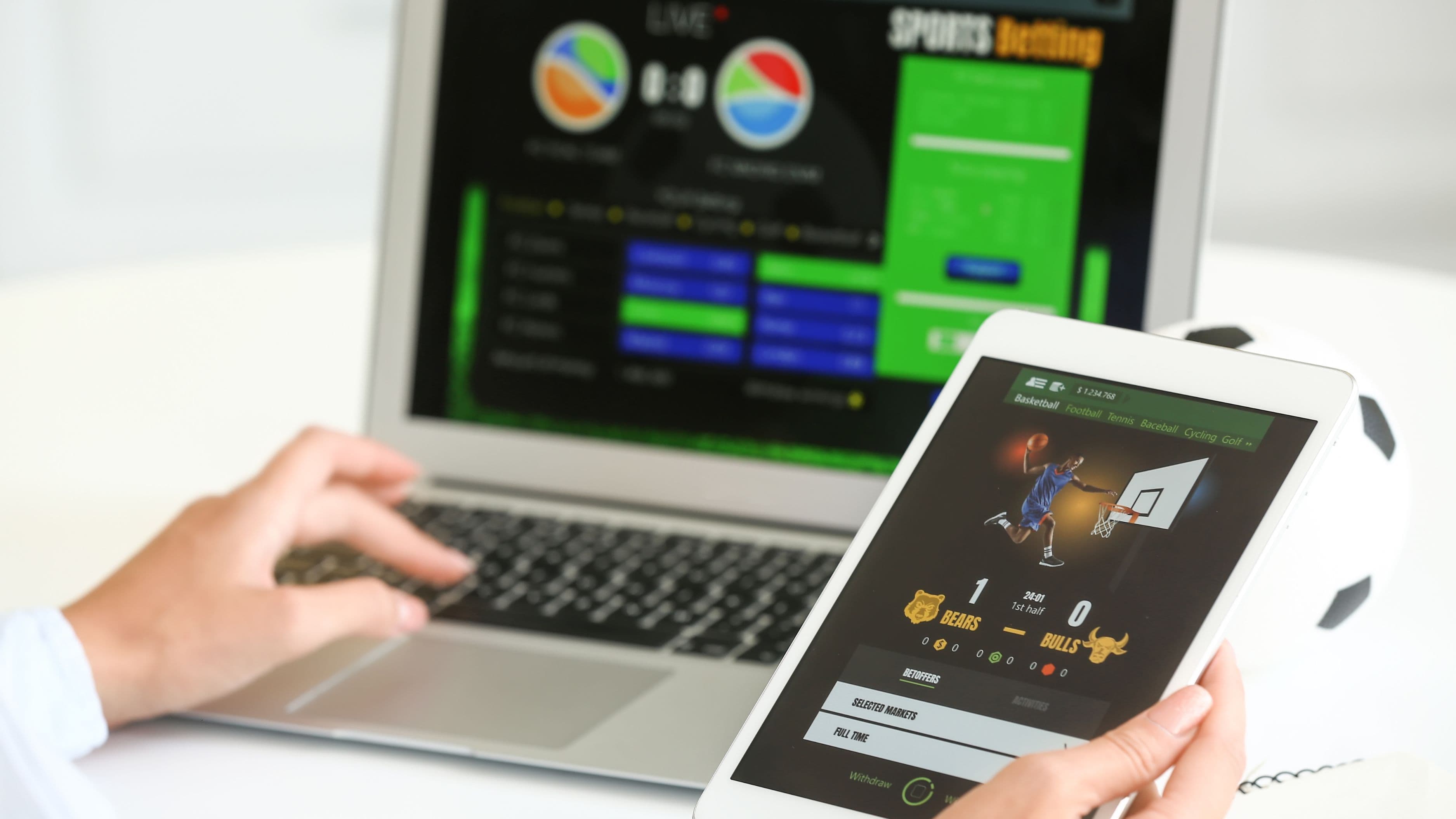
In-play betting – also called live betting or in-running betting – allows you to place wagers on a sporting event after it has already started. Odds update continuously throughout the game based on what's happening on the field, court, or pitch. A team that goes up 2–0 in the first half will see their odds to win shorten dramatically. A quarterback who throws two interceptions early will push his team's moneyline out significantly. The odds are a real-time reflection of game state, momentum, and remaining time.
Most major sportsbooks – DraftKings, FanDuel, BetMGM, Caesars, and others – now offer in-play markets on virtually every major sport. The range of available bets varies by sport and platform, but typically includes match winner, point spread, total points, and a variety of game-specific props (next team to score, player to get the next assist, whether the next drive results in a punt, and so on).
The technology behind in-play betting is sophisticated. Sportsbooks use automated pricing models fed by real-time data streams – tracking player positions, game stats, time remaining, and historical patterns – to generate odds with extremely low latency. That same technology is what allows them to suspend markets briefly during high-uncertainty moments (a red card, a penalty shootout, a turnover deep in opponent territory) and reopen them with adjusted lines seconds later.
How In-Play Betting Differs From Pre-Game Wagering
Pre-game wagering is the traditional model: odds are posted hours or days before the event, you research and place your bet before the opening whistle, and then the event determines the outcome. The information asymmetry between the bettor and the sportsbook is at its most even at this stage – both sides are working from the same public data, historical records, injury reports, and line movements. Sharp bettors who do meaningful analysis have genuine edges in pre-game markets.
In-play betting operates on a compressed timeline with a very different information landscape. Here's where the meaningful differences lie:
Odds move faster and are harder to exploit. Pre-game lines can sit for hours and may contain inefficiencies that sharp eyes identify. In-play odds update in seconds, often before the average bettor has time to process what they're seeing. The sportsbook's pricing engine is faster than human reaction time in most cases, which narrows the window for finding genuine value.
The available information changes in real time. In pre-game markets, you're working from static information – the available data is the same whether you bet early or at the last minute (accounting for line movement). In in-play markets, new information is constantly entering the system: a star player picks up a yellow card, a team's top scorer appears to be nursing a hamstring, the wind picks up in the second half.
A bettor watching the game has access to qualitative, real-time information that the sportsbook's algorithm may not fully price immediately.
Emotional dynamics are significantly different. Pre-game betting happens away from the action, usually with time to think. In-play betting happens in the middle of the game, with the emotional pull of what's unfolding right in front of you. This is where in-play betting's biggest risk factor lives – the psychological pressure to chase a loss, double down on a struggling position, or place reactive bets based on recency bias rather than analysis.
Bet frequency can increase substantially. A single game that would generate one or two pre-game bets can generate dozens of in-play opportunities. More bets mean more exposure to the house edge, which compounds over a session in ways that pre-game limits naturally constrain.
Where In-Play Betting Has Genuine Strategic Value
The case for in-play betting isn't hype – there are specific situations where watching the game gives you an informational edge that pre-game analysis couldn't have produced.
Visible information the algorithm is slow to price. Automated in-play models are excellent at processing scoreboard data quickly. They're less fast at incorporating nuanced qualitative information – a team's visible fatigue in the 70th minute, a goalkeeper who's clearly uncomfortable with the wind direction, a basketball team's defensive scheme that's obviously been adjusted at halftime. A sharp bettor watching live can sometimes identify these factors before the algorithm fully adjusts.
In-play hedging and position management. If you placed a pre-game bet that's currently in a profitable position – say, you backed the underdog to win and they're up by two goals at halftime – you can lay off some of that exposure in-play by betting the other side at more favorable odds. This locks in a partial profit regardless of the final result. It's a trading approach rather than a pure gambling approach, and it's one of the more disciplined uses of live markets.
Value from overreaction. Markets sometimes overreact to early game events. A team that concedes an early goal may have their win odds pushed out further than the underlying probability warrants, particularly if it's clearly against the run of play. An experienced bettor who understands the sport can identify when the market has moved too far in response to a single event and find value in backing the now-longer odds.
Sport-specific in-play patterns. Certain sports have structural in-play patterns that create recurring betting angles. In tennis, momentum swings between sets are frequent and sometimes predictable. In basketball, odds move sharply on runs that often don't persist across the full game. In football, teams going 1–0 down at home frequently push harder and create more scoring opportunities than the in-play odds reflect. These patterns don't guarantee outcomes, but they provide a framework for identifying when in-play lines may have moved too far.
The Risks of In-Play Betting
The same features that make in-play betting strategically interesting also make it one of the easier ways to lose money quickly if you're not disciplined about how you approach it.
Speed works against impulsive bettors. The rapid movement of in-play odds creates urgency that feels like opportunity. That urgency is often manufactured – by the time most bettors see what looks like a good in-play line, the window to act at that price may already have passed, or the value may have been an illusion created by incomplete information. Placing bets quickly to catch a moving line without adequate analysis is one of the most common mistakes in live betting.
Chasing losses is magnified in-play. A pre-game bettor who's lost their main selection might not have another betting opportunity for hours. An in-play bettor has a continuous stream of new markets available throughout the game, creating the temptation to place additional bets to recover a position. Chasing losses in a fast-moving in-play environment compounds losses with a speed that pre-game wagering rarely matches.
The house edge applies to every bet. In-play markets carry a vig (the sportsbook's built-in margin) on every single bet, just like pre-game markets. With the increased volume that in-play betting naturally encourages, that edge compounds significantly across a session. More bets doesn't mean more opportunity – it means more exposure to the bookmaker's margin.
Suspension of markets at key moments. Sportsbooks suspend in-play markets during the highest-uncertainty moments of a game – penalty kicks, potential red cards, last-minute scoring opportunities. This isn't arbitrary: it protects the book from being bet against at stale odds during moments of rapid information change. It also means that the moments where the game is most volatile – and where some bettors think they have the clearest edge – are precisely the moments when betting is unavailable.
Practical Guidelines for In-Play Betting
If you're going to use in-play markets, a few habits separate disciplined live bettors from reactive ones.
Watch the game before you bet it in-play. The entire premise of in-play betting's strategic value rests on observational information. If you're not watching the game closely, you're simply betting on a moving line with less context than the sportsbook has. That's a losing proposition over time.
Set a pre-session limit specifically for in-play. The higher frequency of in-play betting means a separate bankroll allocation is useful. Decide before the game starts how much you're willing to place on in-play markets during that event, and treat that as a hard limit regardless of what happens during the game.
Use in-play to hedge pre-game positions deliberately, not reactively. The most disciplined in-play bettors use live markets to manage pre-game exposure rather than to take entirely new positions. If you placed a pre-game bet and the game state has shifted meaningfully in your favor, considering a hedge in-play is a legitimate strategy. Placing in-play bets because the game is exciting and you want more action is a different behavior entirely.
Stick to sports and markets you know well. The qualitative edge in in-play betting comes from genuinely understanding what you're watching. Betting in-play on a sport you follow closely is meaningfully different from betting on an unfamiliar sport just because the in-play market is available.
In-Play Betting and Responsible Gambling
The combination of high bet frequency, real-time odds movement, and the emotional intensity of watching live sport creates conditions that can accelerate problem gambling behavior more quickly than pre-game wagering. If you find yourself placing bets impulsively during games, chasing losses across in-play markets, or spending significantly more than intended on live betting sessions, those are meaningful signals to take seriously.
Most licensed sportsbooks offer deposit limits, session time limits, and cool-off periods that apply to in-play betting as they do to pre-game markets. Using these tools is a practical and smart approach to keeping in-play betting within a controlled framework.
FAQ
Can you make money from in-play betting consistently? Some experienced bettors find consistent value in specific in-play markets, particularly when they're watching sports they know deeply and using disciplined bankroll management. For the majority of recreational bettors, in-play betting increases exposure to the house edge rather than creating additional edges. The same principle applies as pre-game: value comes from knowledge and discipline, not from the format of the bet.
Why do sportsbooks suspend in-play markets sometimes? Market suspension protects the sportsbook from being bet at stale odds during moments of high uncertainty – a penalty being awarded, a player injured, a video review in progress. The book temporarily removes markets until it can reprice with updated information. It's standard practice and not a sign of anything unusual.
Is in-play betting available on all sports? Most major sports have in-play markets on leading sportsbooks, but coverage varies. Football (soccer), basketball, tennis, and American football typically have the deepest in-play market offerings. Niche sports may have limited or no live markets. Market depth also varies – a major Champions League fixture will have far more in-play options than a lower-league match.
Are in-play odds worse than pre-game odds? The margin (vig) on in-play markets is often slightly higher than pre-game markets, reflecting the additional operational cost of maintaining real-time pricing and the higher uncertainty involved. This isn't universal – it varies by sportsbook and market – but it's worth factoring into your approach.
Can I use a betting exchange for in-play wagering? Yes – and for experienced bettors, exchanges like Betfair (where available) often provide better in-play odds than traditional sportsbooks because you're betting against other bettors rather than a bookmaker margin. The trade-off is that market liquidity can thin out quickly on smaller events or late in games, and commission still applies on winnings.
📚 Sources
American Gaming Association – State of the States 2024 (US Sports Betting Data): https://www.americangaming.org/research/state-of-the-states/
Responsible Gambling Council – In-Play Betting and Problem Gambling Risk Factors: https://www.responsiblegambling.org/research/research-reports/
UK Gambling Commission – Remote Gambling and Software Technical Standards: https://www.gamblingcommission.gov.uk/licensees-and-businesses/guide/remote-gambling-and-software-technical-standards
Journal of Gambling Studies – In-Running Betting: A Risk Factor for Problem Gambling: https://link.springer.com/journal/10899
National Council on Problem Gambling – Helpline and Resources: https://www.ncpgambling.org/help-treatment/national-helpline-1-800-522-4700/