
Niche sports offer real opportunities for the informed bettor. Sportsbooks invest far less in pricing these markets than they do in the NFL or Premier League, which means errors show up more often and stay longer. The catch is that you need to understand how to read these markets, why they behave the way they do, and what to watch out for before you start putting money on them.
The Basics Still Apply – With One Important Caveat
American odds, decimal odds, and fractional odds work identically in niche sports as they do in major ones. A moneyline of –150 means you need to bet $150 to win $100 regardless of whether the sport is cricket, darts, or competitive cornhole. A +220 means a $100 bet returns $220 in profit. Decimal odds of 1.80 mean you multiply your stake by 1.80 to get your total return. These mechanics don't change based on the sport.
The caveat is implied probability. Every odds format converts to an implied probability – the likelihood the odds are suggesting a given outcome will occur. A –150 favorite carries an implied probability of about 60%. A +220 underdog implies roughly 31%. When you add both sides together and get a number above 100%, that excess is the vig – the sportsbook's margin built into the market.
In major sports, the vig on a moneyline is typically 4–6%. In niche sports, it can run significantly higher – sometimes 8–12% or more – because the book is pricing in its own uncertainty about the market. A wider vig means a larger edge the sportsbook needs to overcome before your bet becomes profitable. This is the first thing to calculate whenever you're looking at a niche market. If the implied probabilities on both sides of a bet add up to 115% or more, you're paying a steep price just to participate.
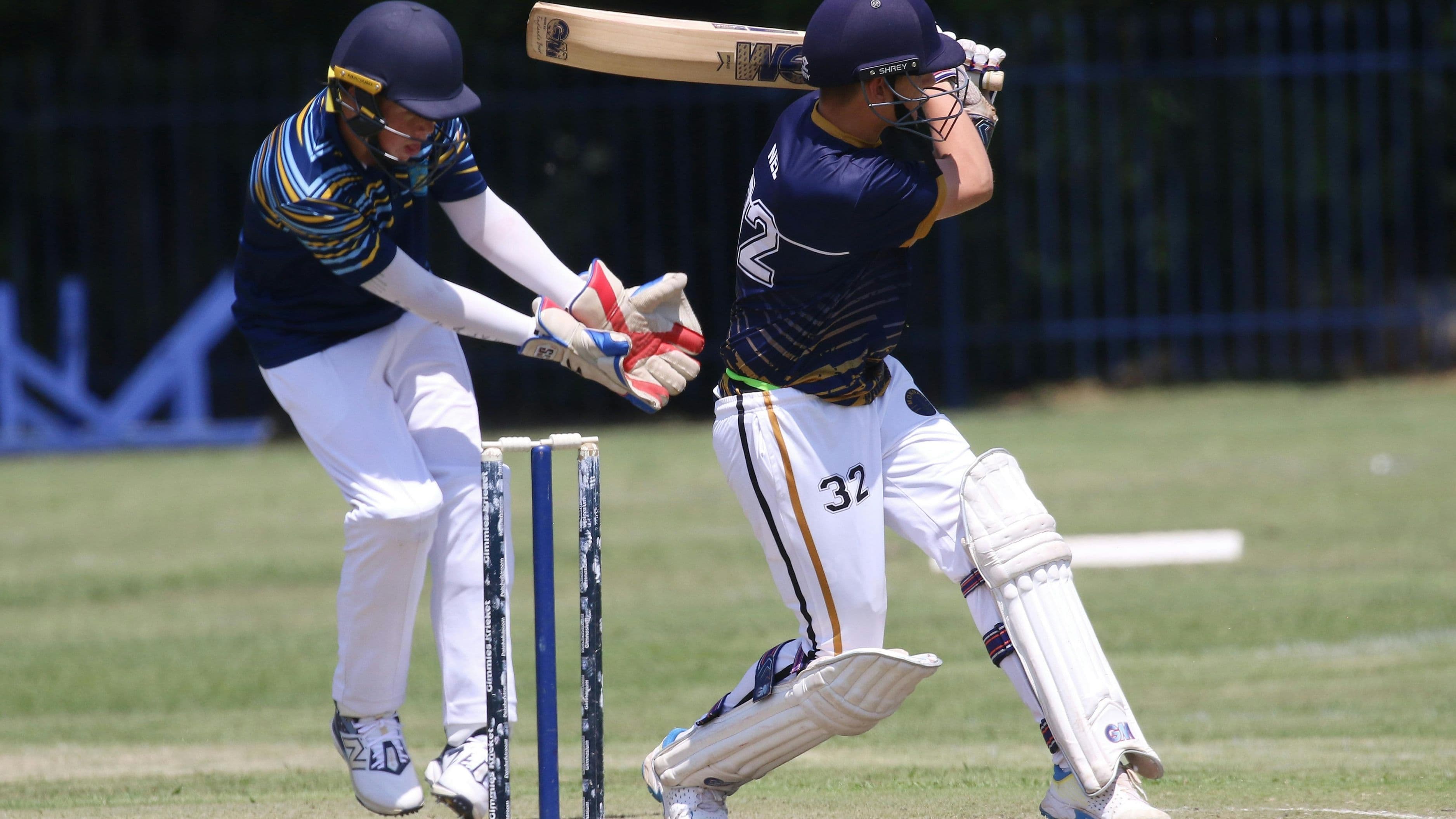
Cricket: The Most Statistically Rich Niche Market
Cricket has an enormous global betting market – particularly in the UK, India, Australia, and South Africa – which means that for major international matches and Indian Premier League (IPL) games, the markets are actually quite well-developed. For county cricket, domestic tournaments in smaller markets, or lower-profile international series, you start moving into genuine niche territory.
The most important thing to understand about cricket betting is that format determines everything. Test cricket (played over five days), One Day Internationals (50 overs per side), and T20 (20 overs per side) are so structurally different that they're almost different sports from a betting standpoint. A team that dominates T20 formats may be far weaker in Tests, and vice versa. Applying a team's overall record across formats without separating by format is a beginner mistake that leads to systematically mispriced assessments.
The primary bet types in cricket are match winner (moneyline equivalent), series winner, toss winner, and a range of in-play markets during the match. Total runs and wicket totals – the cricket equivalent of over/under – are widely available. The toss winner market is structurally a near-50/50 coin flip, so the vig on it is essentially pure margin – it's not a market that rewards research.
Pitch conditions and weather are disproportionately important in cricket relative to almost any other betting market. A pitch that favors spin bowling will disadvantage teams relying on pace, and overhead cloud cover or a slightly damp pitch can significantly aid swing bowling early in a Test. Sportsbooks price in general condition factors, but detailed pitch report information – available from credible cricket outlets including ESPNcricinfo and Cricbuzz – can reveal when the line hasn't fully adjusted to conditions. Weather is also critical in Test cricket, where rain reduces overs and can shift the effective target and strategy for both teams mid-match.
Pickleball: The Newest Frontier
Pickleball betting is genuinely new territory. The sport's professional circuit – primarily the Professional Pickleball Association (PPA Tour) and Major League Pickleball (MLP) – has grown rapidly, and a handful of sportsbooks, mostly offshore and specialist platforms, now offer markets on select events.
Because the market is so new, the pricing is notoriously thin and inconsistent. Odds are often set by generalist traders with limited specific game knowledge, using basic ranking data and recent results without the depth of contextual analysis that more established sports receive. This creates pricing errors in both directions, but the problem is that the market is also illiquid enough that your bet may move the line meaningfully on its own, and bet limits are low.
Reading pickleball odds requires understanding the tour structure. The PPA Tour uses a standard singles and doubles format; Major League Pickleball uses a team-based format where players are drafted and compete across men's doubles, women's doubles, and mixed doubles. These formats produce very different competitive dynamics. In MLP team events, a player who dominates singles may be weaker in mixed doubles with a particular partner – the matchup and pairing structure matters as much as individual ranking.
Player form in pickleball can shift quickly because the professional field is still relatively small and the skill gap between top players and the rest is unusually steep. The top five to ten players on each tour are significantly better than the field, which makes them consistent but also heavily favored in most markets. The value, when it exists, typically sits in mid-tier matchups where the book has less certainty and individual context – recent partnership chemistry, travel fatigue from a heavy tournament schedule, or a player known to underperform in windy conditions – can be quantified by someone following the tour closely.
Darts: Small Market, Deep Community Knowledge
Darts has a well-established betting market in the UK, centered on the Professional Darts Corporation (PDC) and its flagship events – the World Championship, the Premier League, and the World Matchplay. For these major PDC events, the markets are liquid enough to be reasonably efficient. For Challenge Tour events, the European Tour, or Women's Series matches, you're in genuine niche territory.
Darts has a specific variance dynamic worth understanding before betting. The sport involves high scoring and format-dependent variance – best-of-three legs versus best-of-eleven sets produces dramatically different competitive outcomes. In shorter formats, upsets are significantly more common because a lower-ranked player needs to string together fewer moments of peak performance to win. In longer formats, the better player's consistency reasserts itself. Recognizing which format a match is using and how that affects implied probability is fundamental to reading darts odds accurately.
Checkout percentage, three-dart average, and first-nine-dart average are the key performance metrics in darts and are publicly tracked across the PDC tour. The challenge is that these averages can be heavily influenced by stage fright (known in darts as "dartitis" at its extreme), crowd dynamics, and tournament fatigue – factors that show up in player behavior and form reports from community sources faster than they adjust in sportsbook lines.
Table Tennis: Volume and Speed
Table tennis has become one of the most active niche betting markets globally, primarily due to the sheer volume of matches available. Professional leagues in China, Germany, and Eastern Europe produce dozens of matches per day across different tiers of competition, and many sportsbooks cover these markets with live betting.
The challenge with table tennis betting is that the volume of matches creates significant integrity risk at lower levels. Match fixing in lower-tier professional table tennis has been well-documented by betting integrity organizations. Stick to the higher-profile leagues and tournaments – the Bundesliga, the Chinese Super League, and major WTT events – where integrity oversight is more robust and pricing is more reliable.
Reading table tennis odds requires understanding the rubber format. Players choose from different rubber types (speed-oriented versus spin-oriented) that suit different playing styles, and matchups between contrasting styles create predictable strategic dynamics. This is niche-within-niche knowledge, but it's the kind of specific insight that creates genuine betting edge when the books aren't pricing it precisely.
MMA and Combat Sports: Niche in Disguise
UFC events are no longer niche – they're major mainstream markets with deep liquidity. But regional MMA promotions, Bellator events outside the main cards, boxing matches below the top-tier world title level, and newer promotions like PFL and ONE Championship sit in niche territory where pricing is noticeably less refined.
In combat sports, judging criteria and the specific judge assignments for a fight have significant but underpriced effects on moneyline odds. A fight taking place in a jurisdiction known for favorable hometown judging, or with a panel of judges whose scoring tendencies are publicly available, creates a readable edge that informs how to price method-of-victory and round props. Sportsbooks at the major level have incorporated some of this; at regional and mid-tier event level, they often haven't.
Fighter styles and physical matchups are the core of combat sports analysis, and in niche markets these aren't always fully reflected in the opening lines. A wrestler facing a striker with poor takedown defense, or a boxer with a documented chin weakness facing a heavy puncher, creates structural edges in the win probability that show up more clearly in niche markets than in fully priced UFC main events.
How to Identify Value in Niche Markets
Value in any betting market exists when the implied probability in the odds is lower than your assessed probability of the outcome occurring. The challenge in niche markets is that assessing probability accurately requires information that often isn't consolidated anywhere – it lives in community forums, specialized statistics sites, and your own observation of the sport.
A few practical principles for approaching niche sports value:
Become a genuine expert in one niche rather than a casual observer across several. The edge in niche markets is informational, and the information advantage requires real investment in following the sport closely. A bettor who watches every PPA Tour pickleball event, follows player injury updates on social media, and understands the strategic matchups between top players has a meaningful edge over a book whose odds were set by a generalist trader. That edge doesn't extend to a different niche automatically.
Compare lines across multiple books before placing any bet. Line shopping is important in all betting, but it's especially impactful in niche markets because different sportsbooks often have meaningfully different odds on the same event. One book's line might be based on more recent form data; another might be slower to adjust. The best available price on a niche market can sometimes be 10–15% better than the worst available price on the same bet, which is a much larger gap than you'd typically find on a major league game.
Treat early markets with skepticism. Niche sports books often open their lines early without the benefit of full information – injury updates, weather, recent form adjustments. The opening line on a cricket match two weeks before it's played reflects general quality differential more than specific matchup information. As match day approaches and more information is available, sharper bettors move these lines. Getting in before that information is priced in can be advantageous when you have specific knowledge; betting early without that advantage just means you're absorbing the uncertainty the book built into the opening price.
Pitfalls Specific to Niche Betting
The most common pitfall is confusing thin markets with soft markets. A thin market – one with low limits and few bettors – isn't automatically mispriced. Sometimes it's thin simply because it's obscure, and the pricing is actually reasonable. Thin markets do contain more errors, but the error isn't guaranteed to be in your favor. Assess the price on its own merits; don't assume value exists just because the sport is unfamiliar to most bettors.
Recency bias is amplified in niche sports because the sample sizes for each competitor are much smaller. A pickleball player who won three consecutive tournaments might have a sample of 30–40 matches over that stretch. A Premier League team has 38 league games per season plus cup competitions. Drawing strong predictive conclusions from small samples in niche sports leads to overconfidence that the book will exploit.
Finally, withdrawal and payout reliability matters more in niche sports because the books offering the deepest niche coverage tend to include offshore and smaller operators. Before depositing with any platform for niche betting, verify their licensing, read independent reviews of their payout practices, and start with smaller deposits to assess operational reliability. The best odds mean nothing if a book creates friction around withdrawals.
FAQ
Which sportsbooks offer the best coverage of niche sports? For cricket, Bet365 and Betway are consistently well-regarded. For darts, most major UK-facing books offer solid PDC coverage. For pickleball, availability is still limited – DraftKings and BetMGM offer some coverage, as do specialist platforms when major PPA events run. For table tennis, 1xBet and Pinnacle offer broad coverage, though due diligence on the operator is important before depositing.
How do I calculate implied probability from odds? For American odds: if the number is negative (e.g., –150), divide 150 by (150 + 100) to get 0.60 or 60%. If the number is positive (e.g., +220), divide 100 by (220 + 100) to get 0.312 or 31.2%. For decimal odds (e.g., 1.80), divide 1 by 1.80 to get 0.556 or 55.6%.
Is live betting more or less risky in niche sports? It depends heavily on whether you're watching the match live and understand the sport's in-game dynamics well enough to interpret momentum shifts in real time. If yes, in-play niche markets can offer genuine value because the books are slower to adjust. If no, live betting in niche sports without real-time context is high variance and difficult to execute profitably.
How do I find statistics and research sources for niche sports? For cricket: ESPNcricinfo and Cricbuzz. For darts: Dartsdatabase.co.uk and the official PDC statistics page. For pickleball: the PPA Tour website and pickleballbrackets.com. For table tennis: TableTennista and the WTT official site. For MMA: Tapology and UFC Stats. Community forums and subreddits for each sport are often the fastest source of breaking news on roster changes, injuries, and form.
The Edge Is There – If You Earn It
Niche sports betting rewards genuine expertise more directly than mainstream sports, precisely because the market infrastructure is less developed. The books have less information, less analytical depth behind their lines, and less sharp action correcting their errors. That's a real opportunity. But the opportunity belongs to the bettor who actually knows the sport – not to the one who assumes that unfamiliarity with the market automatically means the prices are wrong.
Pick a niche that genuinely interests you, learn it properly, and approach the markets with the same disciplined framework you'd apply anywhere else. The mechanics of smart betting don't change. The sport does.
📚 Sources
ESPNcricinfo. Player and match statistics database. – https://www.espncricinfo.com/statistics
Professional Darts Corporation. Player statistics and rankings. – https://www.pdc.tv/players/player-statistics
Esports Integrity Commission (ESIC). Table tennis integrity concerns. – https://esic.gg/codes/table-tennis/
Professional Pickleball Association. PPA Tour rankings and results. – https://www.ppatour.com/players/
Shin, H. S. (1993). Measuring the incidence of insider trading in a market for state-contingent claims. The Economic Journal – https://www.jstor.org/stable/2234305
World Table Tennis. Official WTT rankings and tournament results. – https://worldtabletennis.com/rankings
Pinnacle. Sports betting resources: How to read betting odds. – https://www.pinnacle.com/en/betting-articles/educational/understanding-betting-odds/ZWKM9JQKRVF89BJ3