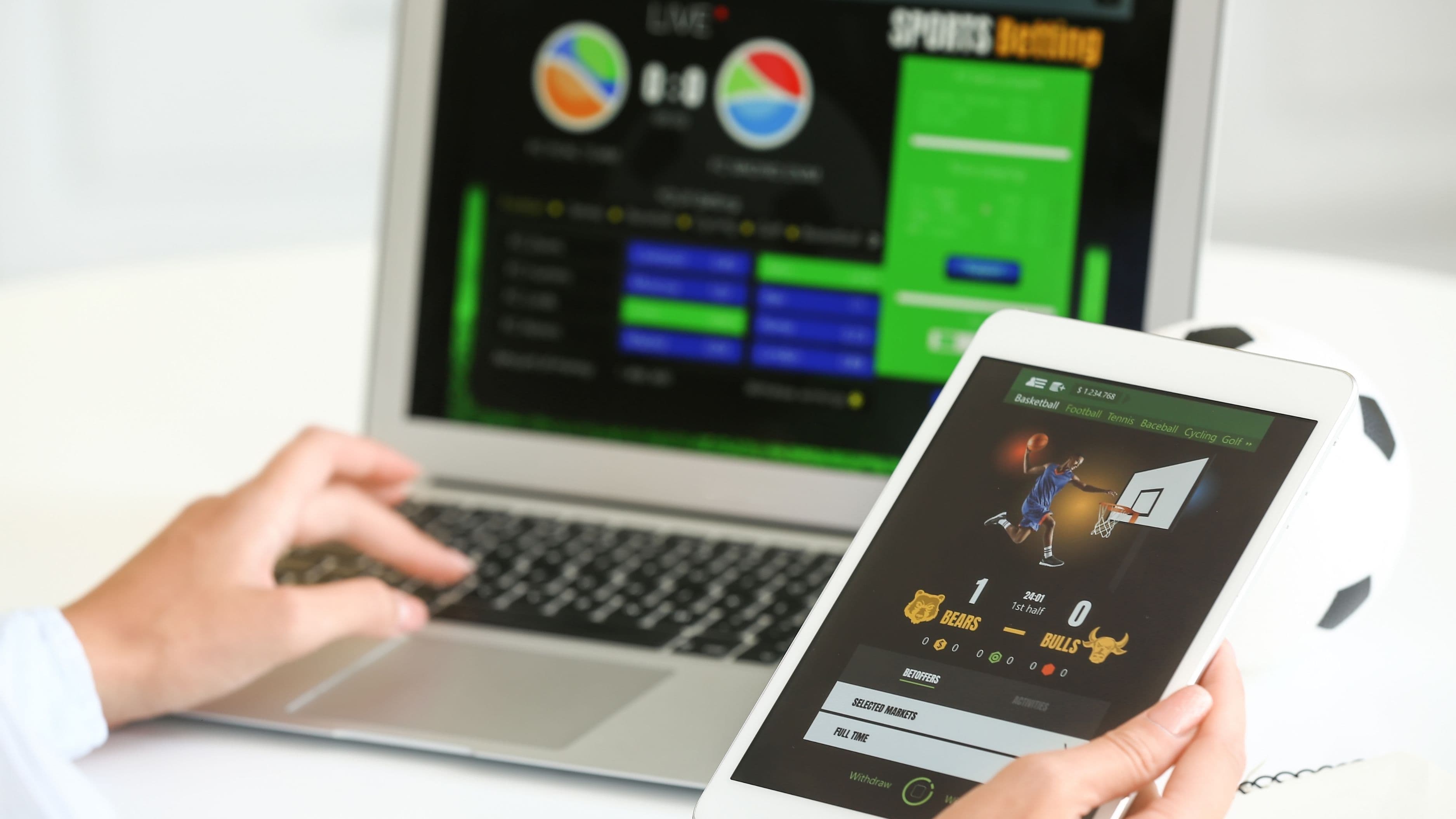
Predictive models can help you bet smarter, but they are not a cheat code. Bookmakers run sophisticated models of their own, backed by professional traders and sharp money that shapes their lines. This guide explains what predictive models actually do, how they work, whether they can beat the market, and what risks come with trying.
Responsible gambling note: No model, system, or strategy guarantees profit. Sports betting always carries a risk of loss, and you should only bet money you can afford to lose. If gambling is causing problems for you or someone you know, call or text the National Council on Problem Gambling's helpline at 1-800-GAMBLER for free, confidential support.
How Predictive Sports Models Work
A predictive sports model is a system that estimates the probability of outcomes, such as a team winning, a total going over, or a player hitting a prop, based on data. The model's probability can then be compared to the probability implied by a sportsbook's odds. When your estimate is meaningfully higher than the book's implied probability, you may have found a value bet.
Converting odds to probability
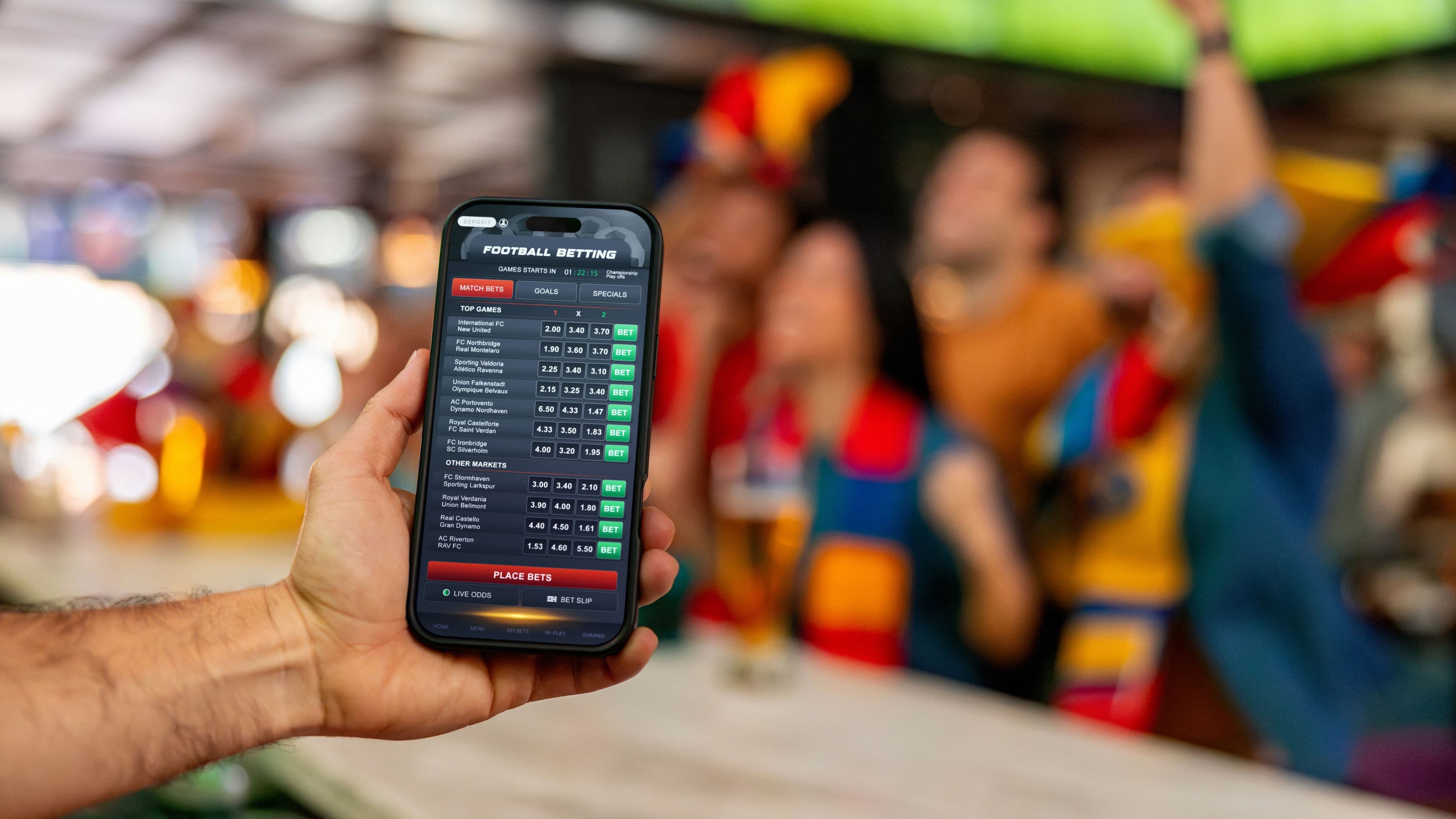
Everything starts with implied probability. At decimal odds of 2.50, the implied probability is 1 ÷ 2.50, or 40 percent. In American odds, +150 is the same thing. If your model says the true chance is 45 percent, the bet has positive expected value on paper. If your model says 38 percent, it doesn't, no matter how much you like the team.
Remember that sportsbooks build a margin, often called the vig or overround, into their prices. That's why the implied probabilities of both sides of a market add up to more than 100 percent, and it's the hurdle every model has to clear.
Common types of models
Rating systems: Elo-style ratings adjust team strength after every game based on results and opponent quality. They're simple and surprisingly effective as a baseline.
Poisson and goal-based models: Popular in soccer and hockey, these estimate how many goals each side will score, then calculate probabilities for results, totals, and scorelines. The Dixon-Coles adjustment is a well-known refinement for low-scoring outcomes.
Regression models: These use variables like efficiency stats, pace, rest, and home advantage to predict margins or totals.
Machine learning models: Methods such as gradient boosting can find complex patterns across many variables, but they are also easier to overfit.
Why It Matters
Using a model forces you to think in probabilities instead of feelings. That alone is a big upgrade over betting on gut instinct, team loyalty, or last week's highlights. It also lets you measure whether you're actually good at this or just remembering your wins.
The market is the opponent
Here's the uncomfortable truth: in major markets, the closing line at a sharp bookmaker is one of the best probability estimates available. It reflects the book's own models plus the betting action of professionals. To beat it consistently, your model has to know something the market doesn't, or react to information faster.
That's why many serious bettors track closing line value (CLV). If you regularly bet at better odds than the final closing price, it's a strong signal your process has an edge, even before your win-loss record has enough volume to prove it.
Can Models Actually Beat the Bookmaker?
Sometimes, yes, but usually in narrower ways than people hope. A 2017 study by researchers Lisandro Kaunitz, Shenjun Zhong, and Javier Kreiner, titled "Beating the bookies with their own numbers," showed that a strategy based on consensus odds across many bookmakers produced profits in simulated and real-money soccer betting. The follow-up is just as important: the authors reported that bookmakers began limiting their accounts once they kept winning.
That captures the real picture. Edges tend to exist in less efficient markets, like lower-tier leagues, niche sports, early-week lines, and some player props, where books have less data and lower limits. In heavily bet markets like major league sides and totals close to kickoff, edges are small and short-lived.
A realistic bankroll example
Imagine you have a $1,000 bankroll and a model that finds a genuine 2 percent edge on average. If you bet a flat 1 percent, or $10, per wager, you'd expect about $0.20 profit per bet over the long run. That's roughly $200 across 1,000 bets, and variance means you could easily be down for hundreds of bets along the way. Those are the realistic numbers behind a "winning" model, which is why patience and bankroll management matter as much as the math.
Practical Application: Building or Using a Model
If you want to try this, a structured approach helps you avoid fooling yourself.
Start with one sport and one market. Focus narrows the data you need and makes errors easier to spot.
Build a simple baseline first. An Elo or basic Poisson model gives you something to measure more complex versions against.
Backtest on data the model hasn't seen. Test on held-out seasons or games, not the same data you used to build it.
Include the vig in every calculation. A model that "wins" before margin can still lose after it.
Paper-trade before staking real money. Log hypothetical bets at the odds you could actually get, and track CLV.
Use conservative staking. Flat staking or a fractional Kelly approach reduces the damage when your edge estimates are off.
Risk Considerations
Overfitting: A model that fits past data perfectly often fails on new games. More variables aren't always better.
Bad data: Injuries, lineup changes, and weather can swing outcomes, and stale data quietly ruins predictions.
Account limits: Books can restrict winning bettors, which caps how much any edge is worth in practice.
Variance: Even a genuine edge can produce long losing streaks. Chasing losses by increasing stakes is one of the fastest ways to go broke.
Paid "model" picks: Be skeptical of services selling guaranteed wins or sky-high win rates. Ask for a verifiable, long-term record, including odds taken.
Legal status: Sports betting laws vary by state and country. Only bet with licensed operators where it's legal for you.
FAQ
Do predictive sports models really work?
They can improve decision-making and occasionally find real edges, especially in less efficient markets. They do not guarantee profit, and most bettors using models still lose after accounting for the bookmaker's margin.
What is the best model for sports betting?
There isn't a single best one. Simple rating and Poisson models are excellent starting points, while more complex models help only when you have quality data and rigorous testing.
What is closing line value?
It's the difference between the odds you bet and the final odds before an event starts. Consistently beating the closing line is widely viewed as a sign that your process has an edge.
Will sportsbooks limit me if I win?
Some do. Many books reserve the right to limit or restrict accounts, particularly if a bettor wins consistently or targets soft lines.
The Bottom Line
Predictive models are one of the smartest tools a bettor can use, because they replace hunches with probabilities and force honest record-keeping. Can they beat the bookmaker? Occasionally, in specific markets, with disciplined staking and a lot of patience, but there are no guarantees, and the market is a formidable opponent. Treat your model as a way to make better decisions, not a promise of profit, and keep betting within limits you can comfortably afford.
If betting stops feeling like entertainment, reach out to the National Council on Problem Gambling at 1-800-GAMBLER, available 24/7.
📚 Sources
Kaunitz L, Zhong S, Kreiner J. "Beating the bookies with their own numbers – and how the online sports betting market is rigged." arXiv, 2017: https://arxiv.org/abs/1710.02824
Dixon MJ, Coles SG. "Modelling Association Football Scores and Inefficiencies in the Football Betting Market." Journal of the Royal Statistical Society Series C, 1997: https://doi.org/10.1111/1467-9876.00065
National Council on Problem Gambling – Help and Treatment: https://www.ncpgambling.org/help-treatment/
American Gaming Association – Responsible Gaming: https://www.americangaming.org/responsibility/